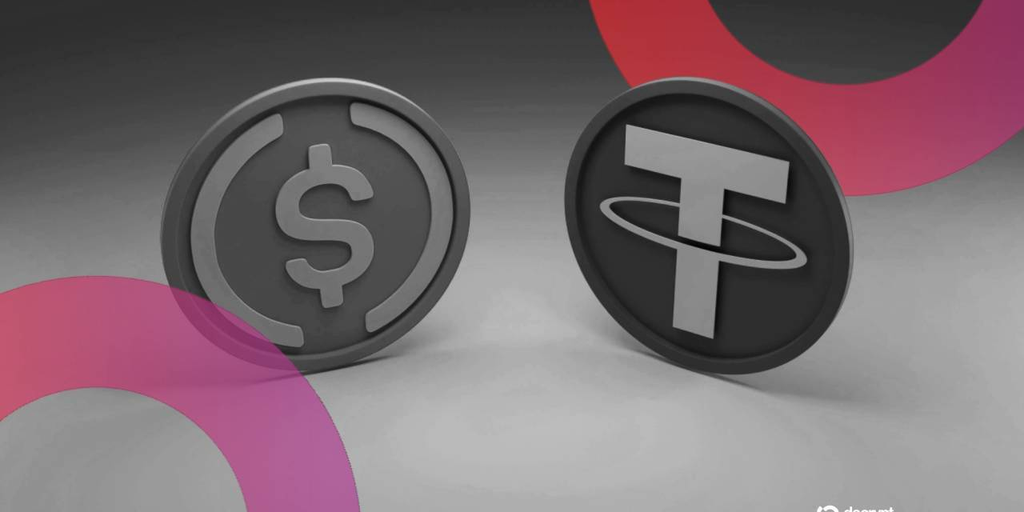
Launch of OpenUSD Stablecoin backed by major global financial firms
A significant new stablecoin project, OpenUSD, has launched with support from over 140 major institutions including Visa, Mastercard, and Google, aiming to challenge existing market leaders like USDC and USDT.
“Debunked OpenUSD stablecoin rumor has no market impact.”
The "OpenUSD" Illusion: Debunking the Big-Tech Stablecoin Myth and the Real Institutional War on USDT and USDC
Rumors of a new "Open USD" stablecoin backed by Google, Visa, and Mastercard have stirred the crypto market, but the headline stems from a fundamental misunderstanding of a 3D graphics standard. Despite this narrative confusion, the threat to USDT and USDC's dominance from actual TradFi giants entering the digital asset space remains the most critical trend for portfolio positioning today.
Analysis: The Reality Behind the Headlines
A sensational narrative has recently circulated within certain market circles, claiming that a new stablecoin called "Open USD" is launching to challenge the dominance of Tether (USDT) and USD Coin (USDC), backed by global giants Visa, Mastercard, and Google.
However, a rigorous cross-reference of this claim reveals a fundamental case of market cross-wiring.
In the technology sector, OpenUSD (Open Universal Scene Description) is a highly respected open-source 3D data exchange framework originally developed by Pixar. The "Alliance for OpenUSD" (AOUSD)—which indeed involves major tech heavyweights—exists to standardize 3D content for the metaverse, spatial computing, and visual effects. It is not a financial instrument, nor is it a stablecoin designed to compete in the digital asset markets.
This rumor gained traction because the digital asset market is hyper-sensitive to signs of massive institutional inflow. While the "Open USD" stablecoin is a tech-industry misnomer, the underlying anxiety driving the rumor is highly valid: traditional finance (TradFi) and global tech conglomerates are actively positioning themselves to capture the multi-billion-dollar stablecoin settlement market.
Instead of a fictitious token, the real disruption is occurring through validated corporate initiatives. We are already seeing PayPal’s PYUSD scale across multiple networks, Visa expanding its stablecoin settlement capabilities directly to public blockchains like Solana, and Mastercard piloting its Multi-Token Network (MTN). The threat to established players like Tether and Circle is not a single mythical asset, but the gradual, compliant encroachment of the legacy financial system.
Strategic Implications: What This Means for Your Portfolio
For the active crypto investor, distinguishing between social media hype and structural market shifts is vital for managing liquidity risk and navigating periods of sudden market volatility.
1. The Real Threat to USDC and USDT Dominance
While Tether (USDT) continues to dominate global offshore liquidity, and Circle (USDC) remains the preferred asset for onshore DeFi, their moat is not impenetrable. The real risk to these native protocols does not come from another crypto-native startup, but from highly regulated, yield-bearing, or corporate-backed settlement assets. If a major consortium of payment processors eventually launches a unified, compliant settlement asset, we could see a rapid migration of transactional volume away from traditional stablecoins.
2. Protocol Security vs. Regulatory Compliance
When evaluating stablecoins for your portfolio, you must weigh protocol security against regulatory censorship risk.
- Offshore/Crypto-Native (e.g., USDT, collateralized algorithmic stables): Highly liquid and censorship-resistant, but they carry elevated regulatory scrutiny and opaque reserve risks.
- Onshore/Corporate (e.g., PYUSD, USDC): Highly compliant and integrated with traditional banking systems, but subject to frozen address risks and direct government oversight.
3. Portfolio Action Plan
- Do Not Chase Ghost Assets: Avoid any newly launched, unverified tokens attempting to trade on the "OpenUSD" name, as these are highly likely to be speculative exploits or outright scams capitalizing on the media confusion.
- Diversify Your Cash Equivalents: To mitigate systemic platform risks, do not custody 100% of your dry powder in a single stablecoin. Balance your holdings between decentralized over-collateralized options (like LUSD or DAI/USDS) and highly liquid, regulated fiat-backed options (like USDC) depending on your yield and risk requirements.
Bottom Line
The "OpenUSD" stablecoin is a tech-industry misnomer, but the relentless push by global payment giants to replace legacy settlement systems with compliant stablecoin infrastructure is the real secular shift investors must prepare for.
Source Citation
This summary is based on the article originally published on Decrypt.
View Full Article on DecryptDisclaimer
The information provided on this site is for informational purposes only and does not constitute financial, investment, or trading advice. Cryptocurrency investments are highly volatile and carry a significant risk of loss. We are not responsible for any financial decisions made based on the content of this article. Please conduct your own research (DYOR) and consult with a professional financial advisor before making any investment decisions.